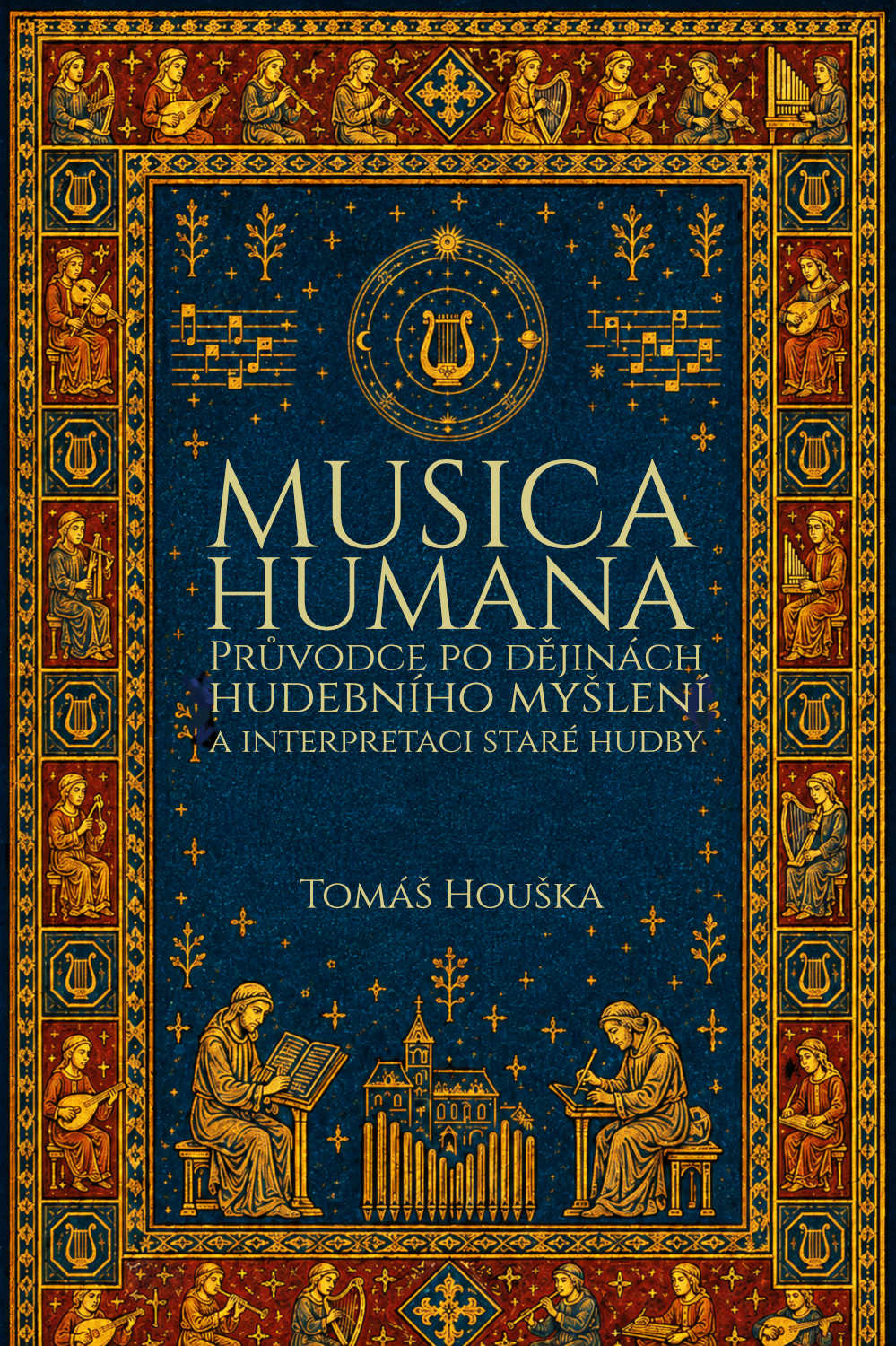
Musica Humana A cultural history preorder
Original price was: 1 .090,00 Kč.850,00 KčCurrent price is: 850,00 Kč.
A cultural history of musical thought and a practical guide to interpreting medieval music
English First Edition — Pre-order Expected publication: Q4 2027
The English edition of Musica Humana is currently being translated, edited and prepared for publication.
By placing a pre-order, you secure a copy of the first English edition at the introductory pre-order price and directly support its translation and production.
This is a paid pre-order. Your copy will be dispatched after publication in 2027. We will send occasional email updates as the translation, editing, printing and dispatch progress.
The estimated publication date may change if the translation or production process requires additional time. Should the edition be cancelled, all pre-order payments will be refunded in full.
Pre-order customers may cancel their order and request a full refund at any time before the book enters physical production.
Who is the book for?
✅ For musicians, historians and all those who want to understand medieval musical thought.
✅ Especially for performers of early music. Musicians, singers, conductors, conservatory students, musicologists and all those who want to understand music before the ars nova as closely as possible to the preserved sources.
✅ It can be an inspiration for cultural anthropologists, religious scholars, historians and those interested in the history of European culture. It is written in such a way that a student, an experienced performer and someone who is just starting out with early music can take something from it.
✅ Students of music history
PRE-ORDER — English edition planned for Q4 2027
Pay now to secure a copy of the first English edition at the introductory price. This product is not currently in stock and will be dispatched after publication.
Available on back-order
Description
Musica Humana
A cultural history of musical thought and a practical guide to interpreting medieval music
What do modern editions leave out — and what did medieval musicians take for granted?
How did European musical thought emerge, and what do we need to understand if we want to perform medieval music today?
Imagine that you are given a medieval composition.
You have a reliable transcription. You can read the notation. You have experience with early music.
And yet many essential questions remain unanswered.
What kind of rhythm should you use?
How should melismas be shaped?
How was pitch actually intoned?
Which tuning system is appropriate?
How should the phrases breathe?
And above all: what might this music really have sounded like?
A modern transcription gives us primarily the written notes. A medieval musician, however, knew many rules that did not need to be written down at all. They were part of common musical practice — as natural and self-evident as the pronunciation of our native language is to us today.
That is why it is not enough to read medieval music through modern eyes.
We must learn to think about music as its original performers and theorists did.
This is the reason Musica Humana was written.
What is Musica Humana?
Musica Humana is not merely a handbook of historically informed performance.
Nor is it simply a textbook of music theory.
It is an attempt to reconstruct a world in which music was not primarily an art intended for passive listening, but a natural part of religion, education, philosophy, ritual and everyday life.
Practical guidance forms one part of the book. The other is a journey into the intellectual world of the people who created, performed and described this music.
Without understanding their aesthetics, philosophy and spiritual imagination, we cannot fully understand their music.
What will you find in the book?
The book combines three closely connected layers.
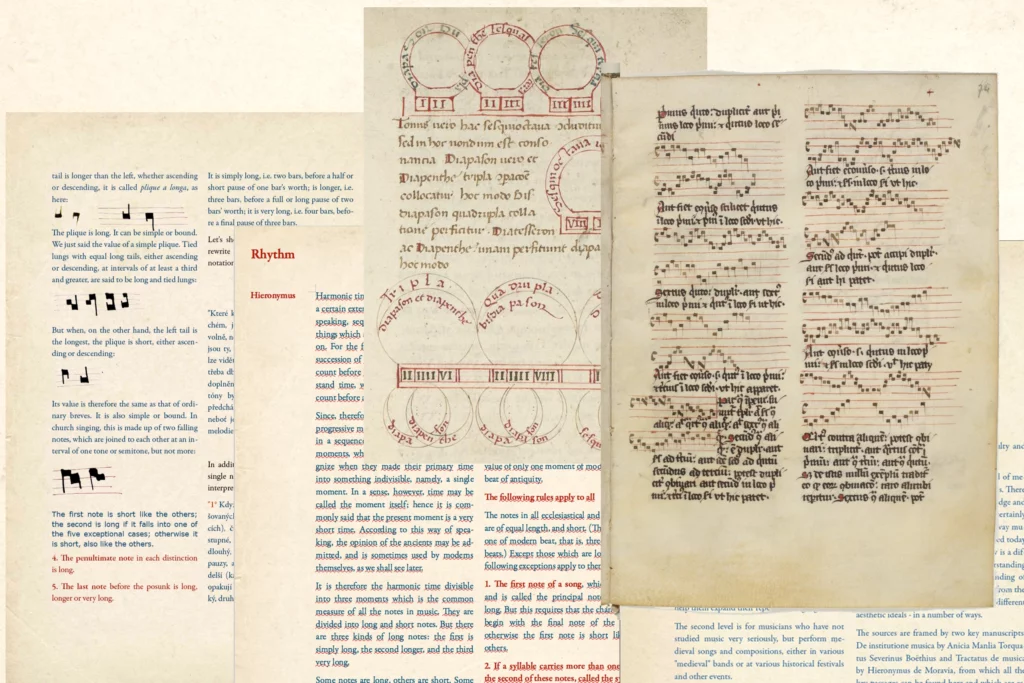
Practical interpretation
The practical sections explore questions such as:
- rhythm and rhythmic flexibility,
- phrasing,
- intonation,
- melismas and ornamentation,
- tuning of voices and historical instruments,
- vocal technique,
- modal performance,
- and the interpretation of medieval notation.
The aim is not to prescribe one universally correct performance style. Instead, the book offers tools for making informed decisions based on historical sources, musical context and practical experience.
Original sources
 The book includes extensive translations of some of the most important texts in the history of European musical thought, including works by:
- Boethius,
- Guido of Arezzo,
- Isidore of Seville,
- Hieronymus de Moravia,
- Franco of Cologne,
- and other medieval authors.
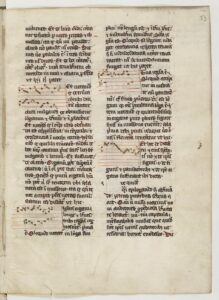 It also draws on earlier sources from the ancient Mediterranean, Ugaritic, Syriac and Persian traditions wherever they help illuminate the development of European musical thought.
These texts are not presented as translations alone.
Each source is introduced, explained in its historical context and connected with questions of present-day performance practice.
The reader can therefore move directly between medieval theory and the practical decisions faced by a modern singer, musician or ensemble director.
Cultural and intellectual history
The liturgical music of medieval Europe did not emerge in isolation.
It was the result of several thousand years of intellectual, religious and musical development.
The book therefore traces the history of musical thought from the earliest civilisations, through the ancient world, and into the High Middle Ages.
It explores how different cultures understood music as part of the structure of the cosmos, the human body, the soul, education, ritual and social order.
It also shows how these ideas influenced European theories of modes, consonance, number, tuning, rhythm and musical meaning.
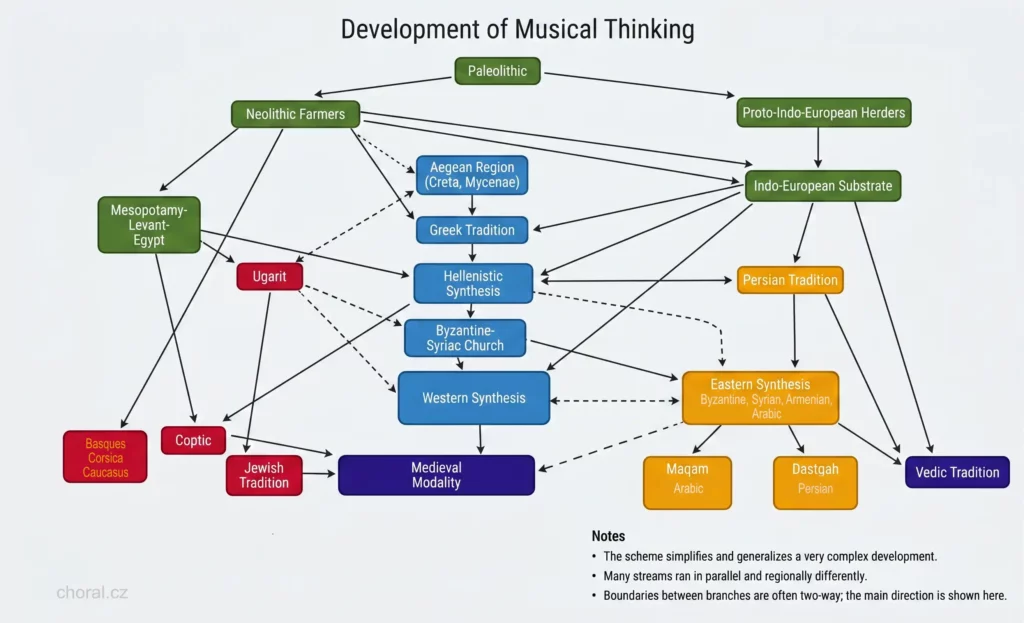
The book therefore traces the history of musical thought from the oldest civilizations through antiquity to the High Middle Ages and shows how the idea of music as part of the world order changed.
-
The book includes
📖 approximately 360 pages
🎵 QR links to audio examples
📜 translations of original historical sources
🎼 practical guidance for singers and musicians
📚 historical commentary connecting theory with performance
Who is this book for?
Musica Humana is intended primarily for performers of early music.
It is written for singers, instrumentalists, conductors, conservatory students, musicologists and everyone who wants to approach music before the ars nova as closely as possible to the surviving historical evidence.
It may also be valuable to:
- historians,
- cultural anthropologists,
- scholars of religion,
- students of medieval culture,
- teachers,
- and readers interested in the intellectual history of Europe.
The book is not intended only for specialists.
It is written so that a student, an experienced performer and a reader just beginning to explore early music can each find something useful.
No advanced degree in musicology is required, although readers with specialist knowledge will also find extensive historical material and primary sources.
Why was this book written?
More than twenty-five years ago, I discovered that modern editions of the same medieval composition often differed substantially from one another.
That raised a simple question: if the modern transcriptions disagree, where should we look for answers?
I began searching for them in the writings of the people who actually knew this music.
This meant learning to read original manuscripts, studying Latin treatises and gradually translating texts that still form the foundations of European music theory.
In the years that followed, I taught courses in medieval singing, performed in concerts, completed a doctorate, published textbooks and continued studying historical sources and performance practice.
Musica Humana is the result of that work.
It does not claim to offer one final and universally correct interpretation of medieval music.
Its purpose is to show how we can ask better questions — and how we can begin to think about music through the eyes and ears of the people who created it.
English first edition — pre-order
The English edition of Musica Humana is currently being translated, edited and prepared for publication.
Expected publication: 2027.
By placing a pre-order, you secure a copy of the first English edition and directly support its translation, editing and production.
This is a paid pre-order. The book is not currently in stock and will be dispatched after publication.
Pre-order customers will receive occasional email updates as the translation, editing, printing and dispatch progress.
The publication date is an estimate and may change if the translation, editorial work or production process requires additional time.
Should the English edition be cancelled, all pre-order payments will be refunded in full.
Pre-order customers may cancel their order and request a full refund at any time before the book enters physical production.
You may also like…
-
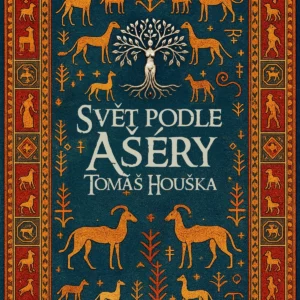
Svět podle Ašéry
690,00 Kč Add to basketSvět podle Ašéry
Kniha Svět podle Ašéry
Kniha Svět podle Ašéry hledá stopy ženského božství v textech, rituálech a hudbě od paleolitu po středověk. Ukazuje, jak byla Ašéra potlačena – a jak zůstala v paměti lidstva přesto živá.
Svět podle Ašéry je knížka na pomezí antropologie – religionistiky – filosofie a hudební historie.
Pro koho je kniha ideální
Pro zájemce o historii nejstarších mýtů, které formovaly naší civilizaci
Pro studenty historie a religionistiky
Pro ty, kterým je divné, proč máme boha otce a ztratili jsme bohyni matku – a chtěli by ji najít
První vydání Světu podle Ašéry je momentálně vyprodané, v tiskárně se pracuje na dotisku bude začátkem podzimu 2026
690,00 Kč -

Kodex Manuale Viatoris
1 .690,00 Kč Select options This product has multiple variants. The options may be chosen on the product pageKodex Manuale Viatoris
Manuale Viatoris je praktický liturgický kodex pro historické LARPy, reenactment, herní bohoslužby a všechny zájemce o středověký zpěv a kulturu.
Je určen především herním kněžím, kantorům, poutníkům a dalším postavám, které při historických akcích vedou bohoslužby, zpívají, čtou nebo vykonávají obřady.
Kodex využijí zejména:
✅ hráči historických LARPů
✅ účastníci reenactmentových akcí
✅ zpěváci a hudebníci zabývající se starou hudbou
✅ studenti hudby a hudební historie
✅ zájemci o zpěv chorálu
✅ fanoušci středověku a středověké hudbyKodex připravujeme a vyjde během října 2026. Předobjednávkou podpoříte jeho vydání.
1 .690,00 Kč
Related products
-
Manuale viatoris
1 .690,00 Kč Select options This product has multiple variants. The options may be chosen on the product pageManuale viatoris
An authentic-looking medieval liturgical book that can actually be used for singing, reading, and conducting ceremonies during a game.
Manuale Viatoris is a practical liturgical codex designed for historical LARPs, reenactment events, in-game services, and anyone interested in medieval singing and culture.
It is intended primarily for characters portraying priests, cantors, pilgrims, and others who lead services, sing, read aloud, or perform ceremonies at historical events.
The codex is particularly suitable for:
✅ historical LARP players
✅ participants in reenactment events
✅ singers and musicians interested in early music
✅ students of music and music history
✅ those interested in chant
✅ enthusiasts of the Middle Ages and medieval musicPre-order
The codex is currently in preparation and is expected to be published in October 2026. By pre-ordering, you will support the production of the first edition and secure your own copy.
1 .690,00 Kč
Reviews
There are no reviews yet.